Introduction + Context
Literature Review
Significance of the Research
Aim, Questions + Objectives
Methodology
Ethical Considerations
Impact
Contribution to Knowledge
Indicative Timeline
Bibliography
STABILITY AS INFRASTRUCTURE:
STABILITY AS INFRASTRUCTURE:
A practice-based built environment study of long-term rental housing in Kent's grey-zone rental market.
A practice-based built environment study of long-term rental housing in Kent's grey-zone rental market.
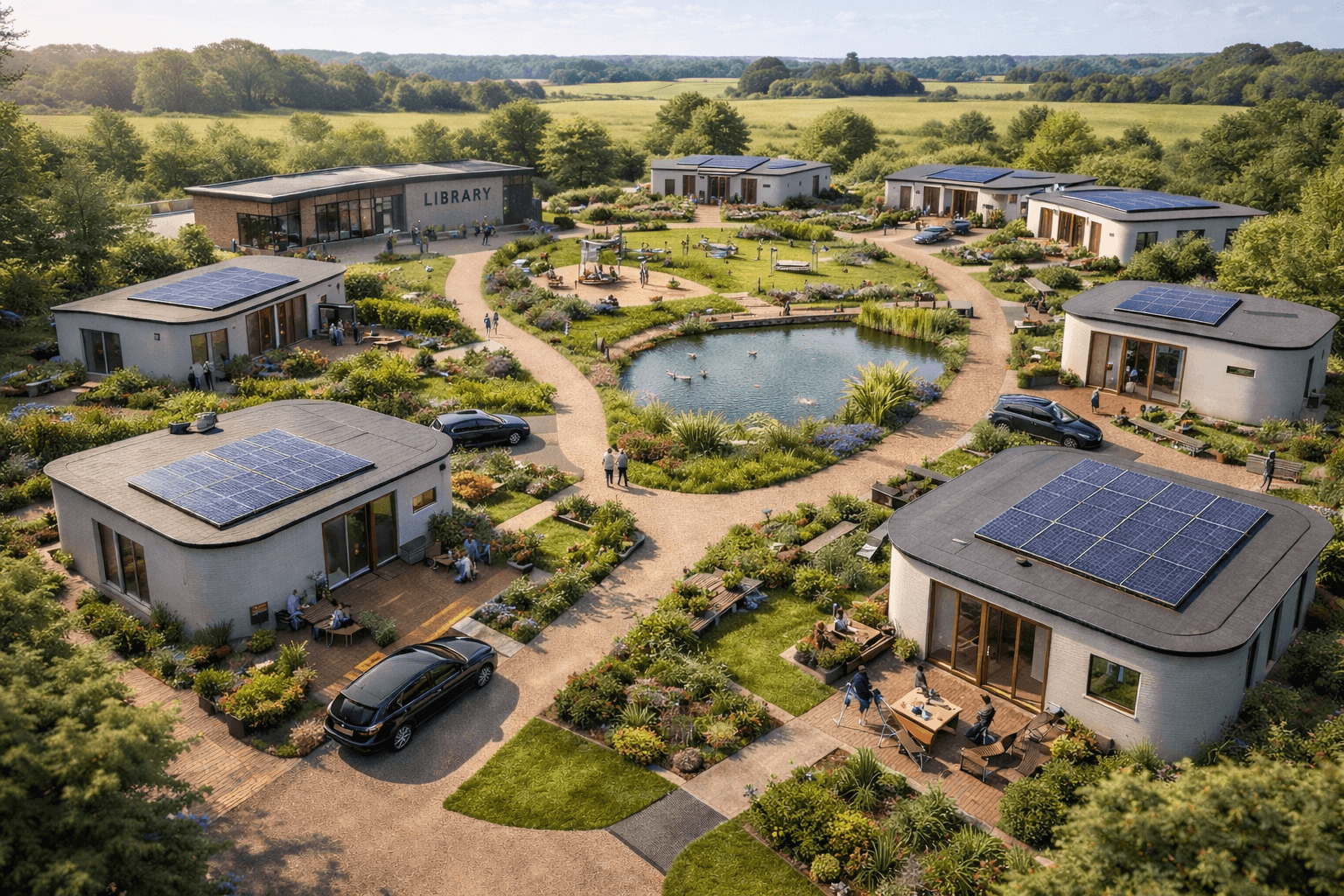
3D Printed Residential Estate
PhD Project Proposal - [Digital Thesis]
Research / Data Analysis / 3D Modelling / System Design / Architecture / UX Design
3D Printed Residential Estate
PhD Project Proposal - [Digital Thesis]
Research / Data Analysis / 3D Modelling / System Design / Architecture / UX Design
[Last Updated - 10.02.26]
[Last Updated - 10.02.26]
1. Introduction + Context
1. Introduction + Context
For a long time, I’ve been watching London’s rental market reach levels that just don’t make sense for most working people. Rents have shot up dramatically compared with what people actually earn and while some headlines about London rent inflation have recently eased, the overall cost burden on tenants remains high across England. According to the Office for National Statistics (2025), average private rents in England were around £1,424 per month in late 2025, representing sustained growth relative to incomes and cost of living, even as inflation slows. Meanwhile many households in England now spend well over the traditionally accepted 30 % of income on rent, with London at around 41 % of income in 2024 (ONS, 2025); figures that signal persistent affordability stress despite small fluctuations in rental inflation.
This pressure does not only stay in London. As working renters increasingly struggle to afford urban rents, many have looked to surrounding areas such as Essex or Kent for more attainable housing. However, even outside the capital advertised rents in parts of the UK have climbed to new records, with some reports showing average advertised prices outside London exceeding £1,300 per month, a level that, while lower than the capital, still represents a high proportion of living costs for many households.
Despite this, rental insecurity persists. Stable long-term tenures are rare, and many renters remain in precarious cycles of repeated moves, short leases and limited ability to save or build security for the future (Shelter, 2024; McKee et al., 2019). These patterns continue even for people in regular employment, which suggests that housing insecurity is no longer just about unemployment, but about a structural mismatch between income, cost of housing and opportunity (Joseph Rowntree Foundation, 2023).
This project focuses on a cohort I’m referring to as the financial grey zone: individuals who earn above the thresholds for social housing eligibility but are excluded from stable private rental and priced out of meaningful home ownership. This group is primarily single working adults aged approximately 20 to 60 without dependents; a deliberately broad spectrum that includes early-career renters facing entry-level wage ceilings, mid-career renters who have spent years without housing progression and later-career renters who remain in the rental sector long after it was once assumed they would exit. The age range captures those who are continuously exposed to rental insecurity and locked out of ownership, rather than transitional renters passing briefly through the market.
Rather than treating this as an abstract policy issue or a purely architectural exercise, this research positions itself within UK Built Environment discourse, aiming to understand and intervene in how housing is designed, delivered and materially experienced in the context of affordability pressures. The central premise is that housing stability (long treated as a social outcome or a policy target) must be reframed as a type of infrastructural condition, something that housing systems can be intentionally designed to support rather than merely respond to.
To explore this, the project proposes investigating whether 3D-printed homes can contribute to delivering durable, cost-effective housing that speaks to the needs of this grey-zone market. It examines the potential of a dedicated estate model that integrates spatial and social systems aimed at long-term occupation, alongside a rental model that embeds a savings mechanism within monthly payments to give residents greater agency and a pathway toward financial resilience. Supporting this is an exploration of how tenant-facing digital systems might enable more stable, equitable living arrangements.
Taken holistically, this research asks: what does a new approach to housing look like for people whom current systems consistently leave insecure? And how might design, technology and tenure innovation contribute to a form of housing that supports long-term stability as a foundational norm, not an exception?
For a long time, I’ve been watching London’s rental market reach levels that just don’t make sense for most working people. Rents have shot up dramatically compared with what people actually earn and while some headlines about London rent inflation have recently eased, the overall cost burden on tenants remains high across England. According to the Office for National Statistics (2025), average private rents in England were around £1,424 per month in late 2025, representing sustained growth relative to incomes and cost of living, even as inflation slows. Meanwhile many households in England now spend well over the traditionally accepted 30 % of income on rent, with London at around 41 % of income in 2024 (ONS, 2025); figures that signal persistent affordability stress despite small fluctuations in rental inflation.
This pressure does not only stay in London. As working renters increasingly struggle to afford urban rents, many have looked to surrounding areas such as Essex or Kent for more attainable housing. However, even outside the capital advertised rents in parts of the UK have climbed to new records, with some reports showing average advertised prices outside London exceeding £1,300 per month, a level that, while lower than the capital, still represents a high proportion of living costs for many households.
Despite this, rental insecurity persists. Stable long-term tenures are rare, and many renters remain in precarious cycles of repeated moves, short leases and limited ability to save or build security for the future (Shelter, 2024; McKee et al., 2019). These patterns continue even for people in regular employment, which suggests that housing insecurity is no longer just about unemployment, but about a structural mismatch between income, cost of housing and opportunity (Joseph Rowntree Foundation, 2023).
This project focuses on a cohort I’m referring to as the financial grey zone: individuals who earn above the thresholds for social housing eligibility but are excluded from stable private rental and priced out of meaningful home ownership. This group is primarily single working adults aged approximately 20 to 60 without dependents; a deliberately broad spectrum that includes early-career renters facing entry-level wage ceilings, mid-career renters who have spent years without housing progression and later-career renters who remain in the rental sector long after it was once assumed they would exit. The age range captures those who are continuously exposed to rental insecurity and locked out of ownership, rather than transitional renters passing briefly through the market.
Rather than treating this as an abstract policy issue or a purely architectural exercise, this research positions itself within UK Built Environment discourse, aiming to understand and intervene in how housing is designed, delivered and materially experienced in the context of affordability pressures. The central premise is that housing stability (long treated as a social outcome or a policy target) must be reframed as a type of infrastructural condition, something that housing systems can be intentionally designed to support rather than merely respond to.
To explore this, the project proposes investigating whether 3D-printed homes can contribute to delivering durable, cost-effective housing that speaks to the needs of this grey-zone market. It examines the potential of a dedicated estate model that integrates spatial and social systems aimed at long-term occupation, alongside a rental model that embeds a savings mechanism within monthly payments to give residents greater agency and a pathway toward financial resilience. Supporting this is an exploration of how tenant-facing digital systems might enable more stable, equitable living arrangements.
Taken holistically, this research asks: what does a new approach to housing look like for people whom current systems consistently leave insecure? And how might design, technology and tenure innovation contribute to a form of housing that supports long-term stability as a foundational norm, not an exception?
2. Literature Review
2. Literature Review
Existing literature on UK housing affordability consistently identifies a widening gap between rental costs, income, and living standards, particularly in high-pressure regions such as London and the Southeast. Research produced by the Office for National Statistics (2025), Shelter (2024), the Joseph Rowntree Foundation (Mulheirn et al., 2023), and the Resolution Foundation (Pacitti, 2024) demonstrates that private renters face increasing financial strain and housing insecurity even when in continuous employment. This body of work highlights a shift in the function of the private rental sector, where insecurity is no longer limited to periods of unemployment or economic crisis.
Further studies of the private rental sector point to the dominance of short-term tenancies, limited tenant protections, and frequent relocation as structural conditions that undermine long-term stability (Parliamentary Office of Science and Technology, 2025). Despite relatively high employment levels, renters face growing difficulty establishing permanence or achieving financial progression through housing. This suggests that housing insecurity has become a systemic condition rather than an individual failure.
Within built environment research, there has been growing interest in alternative tenure models, intermediate housing, and long-term rental systems, particularly in European contexts where renting is more commonly treated as a permanent condition. However, many UK-based models remain tied to assumptions of eventual transition into home ownership or rely on narrow eligibility criteria that fail to reflect the realities of long-term private renters.
Parallel research into construction innovation, including additive manufacturing and 3D-printed housing, has largely focused on speed, cost reduction, and emergency or temporary housing delivery (Architects' Journal, 2025; Homebuilding, 2022). While this literature demonstrates technical feasibility, it often neglects long-term durability, governance, regulatory integration, and lived experience. Similarly, digital systems in housing are frequently discussed in relation to efficiency and management, with limited critical engagement with ethics, autonomy, and resident agency.
This research positions itself at the intersection of these debates, addressing a gap where construction methods, tenure design, and digital infrastructure are rarely considered together as an integrated built environment system. Drawing on government housing data, academic literature, design research methodologies, and case studies of 3D-printed housing in the UK and Europe, the project seeks to synthesise these strands into a coherent, stability-first rental housing model.
Existing literature on UK housing affordability consistently identifies a widening gap between rental costs, income, and living standards, particularly in high-pressure regions such as London and the Southeast. Research produced by the Office for National Statistics (2025), Shelter (2024), the Joseph Rowntree Foundation (Mulheirn et al., 2023), and the Resolution Foundation (Pacitti, 2024) demonstrates that private renters face increasing financial strain and housing insecurity even when in continuous employment. This body of work highlights a shift in the function of the private rental sector, where insecurity is no longer limited to periods of unemployment or economic crisis.
Further studies of the private rental sector point to the dominance of short-term tenancies, limited tenant protections, and frequent relocation as structural conditions that undermine long-term stability (Parliamentary Office of Science and Technology, 2025). Despite relatively high employment levels, renters face growing difficulty establishing permanence or achieving financial progression through housing. This suggests that housing insecurity has become a systemic condition rather than an individual failure.
Within built environment research, there has been growing interest in alternative tenure models, intermediate housing, and long-term rental systems, particularly in European contexts where renting is more commonly treated as a permanent condition. However, many UK-based models remain tied to assumptions of eventual transition into home ownership or rely on narrow eligibility criteria that fail to reflect the realities of long-term private renters.
Parallel research into construction innovation, including additive manufacturing and 3D-printed housing, has largely focused on speed, cost reduction, and emergency or temporary housing delivery (Architects' Journal, 2025; Homebuilding, 2022). While this literature demonstrates technical feasibility, it often neglects long-term durability, governance, regulatory integration, and lived experience. Similarly, digital systems in housing are frequently discussed in relation to efficiency and management, with limited critical engagement with ethics, autonomy, and resident agency.
This research positions itself at the intersection of these debates, addressing a gap where construction methods, tenure design, and digital infrastructure are rarely considered together as an integrated built environment system. Drawing on government housing data, academic literature, design research methodologies, and case studies of 3D-printed housing in the UK and Europe, the project seeks to synthesise these strands into a coherent, stability-first rental housing model.
3. Significance of the Research
3. Significance of the Research
This research addresses an under-examined condition within the UK housing system: long-term rental living for working adults who fall outside traditional categories of provision. While existing scholarship prioritises social housing or home ownership, there is limited built environment research that treats long-term renting as a legitimate and sustainable form of living requiring dedicated spatial design, tenure structures, and governance models.
By framing housing stability as infrastructure, the project introduces a lens through which housing can be evaluated beyond short-term affordability metrics. Stability is positioned as a condition that supports economic participation, wellbeing, and long-term planning, rather than an outcome contingent on market fluctuation. This framing aligns with broader global development priorities relating to access to safe and affordable housing, sustainable infrastructure, and poverty reduction through stability rather than crisis intervention.
Methodologically, the research demonstrates the value of practice-based inquiry by using design outputs as tools for critical investigation. Spatial layouts, physical models, and digital systems are used to test assumptions, expose tensions, and generate knowledge that is both conceptually rigorous and practically legible to built environment practitioners, housing providers, and local authorities.
This research addresses an under-examined condition within the UK housing system: long-term rental living for working adults who fall outside traditional categories of provision. While existing scholarship prioritises social housing or home ownership, there is limited built environment research that treats long-term renting as a legitimate and sustainable form of living requiring dedicated spatial design, tenure structures, and governance models.
By framing housing stability as infrastructure, the project introduces a lens through which housing can be evaluated beyond short-term affordability metrics. Stability is positioned as a condition that supports economic participation, wellbeing, and long-term planning, rather than an outcome contingent on market fluctuation. This framing aligns with broader global development priorities relating to access to safe and affordable housing, sustainable infrastructure, and poverty reduction through stability rather than crisis intervention.
Methodologically, the research demonstrates the value of practice-based inquiry by using design outputs as tools for critical investigation. Spatial layouts, physical models, and digital systems are used to test assumptions, expose tensions, and generate knowledge that is both conceptually rigorous and practically legible to built environment practitioners, housing providers, and local authorities.
4. Aim, Questions + Objectives
4. Aim, Questions + Objectives
Aim
To design and critically evaluate a stability-first, long-term rental housing model for single working adults aged 20–60 in Kent using practice-based built environment research methods.
Research Questions
How can long-term rental housing be designed as stability-first infrastructure within Kent’s grey-zone rental market?
What role can 3D-printed construction play in delivering durable and dignified housing at intermediate rental costs within the UK context?
How can savings mechanisms be ethically embedded into rental systems to support financial resilience?
How might digital systems function as built environment infrastructure rather than tools of surveillance or behavioural control?
What tensions arise when designing housing for permanence within existing economic, regulatory and planning frameworks?
Objectives
To analyse housing affordability and rental instability in Kent using existing datasets.
To design low-density housing typologies suitable for long-term rental occupation.
To investigate the feasibility of 3D-printed housing within UK regulation and planning.
To develop and critically evaluate a savings-integrated rental model.
To prototype a tenant-facing digital system that supports housing operations and community connection without surveillance.
To reflect on the ethical, spatial and operational implications of the proposed system.
Aim
To design and critically evaluate a stability-first, long-term rental housing model for single working adults aged 20–60 in Kent using practice-based built environment research methods.
Research Questions
How can long-term rental housing be designed as stability-first infrastructure within Kent’s grey-zone rental market?
What role can 3D-printed construction play in delivering durable and dignified housing at intermediate rental costs within the UK context?
How can savings mechanisms be ethically embedded into rental systems to support financial resilience?
How might digital systems function as built environment infrastructure rather than tools of surveillance or behavioural control?
What tensions arise when designing housing for permanence within existing economic, regulatory and planning frameworks?
Objectives
To analyse housing affordability and rental instability in Kent using existing datasets.
To design low-density housing typologies suitable for long-term rental occupation.
To investigate the feasibility of 3D-printed housing within UK regulation and planning.
To develop and critically evaluate a savings-integrated rental model.
To prototype a tenant-facing digital system that supports housing operations and community connection without surveillance.
To reflect on the ethical, spatial and operational implications of the proposed system.
5. Methodology
5. Methodology
This research adopts a practice-based, design-led methodology aligned with built environment assessment criteria. A mixed-methods approach is used, combining secondary data analysis, design research, prototyping, and reflective practice. The housing estate functions as a research artefact rather than a final product.
Secondary datasets relating to rental prices, income distributions, land values, and housing supply are analysed to ground design decisions and test affordability assumptions. Design research includes masterplanning, housing typologies, and spatial layouts. Outputs include housing floor plans, a physical architectural model of a Kent-based estate using 3D-printed components, and a curated exhibition. The exhibition functions as a practice-based research output, enabling the housing system to be examined as an integrated spatial, construction, and tenure framework.
A central component of the methodology is the design and evaluation of a long-term rental model with no mandatory exit. The model embeds a default savings contribution within rent, allows emergency access with transparent conditions, and provides withdrawal autonomy after a defined period. Rent is positioned between social and private market rates and assessed for equity, feasibility, and ethical implications.
A tenant-facing digital application is prototyped to support rental transparency, maintenance reporting, and community engagement. The system is explicitly designed to avoid surveillance, scoring, or behavioural enforcement and is evaluated as part of the built environment infrastructure.
The design and research process is documented through an ongoing reflective logging practice, combining written analysis with visual material. Elements of this process are shared publicly in line with principles of building in public, supporting accountability and critical self-evaluation. This reflective practice forms a core component of the written thesis.
This research adopts a practice-based, design-led methodology aligned with built environment assessment criteria. A mixed-methods approach is used, combining secondary data analysis, design research, prototyping, and reflective practice. The housing estate functions as a research artefact rather than a final product.
Secondary datasets relating to rental prices, income distributions, land values, and housing supply are analysed to ground design decisions and test affordability assumptions. Design research includes masterplanning, housing typologies, and spatial layouts. Outputs include housing floor plans, a physical architectural model of a Kent-based estate using 3D-printed components, and a curated exhibition. The exhibition functions as a practice-based research output, enabling the housing system to be examined as an integrated spatial, construction, and tenure framework.
A central component of the methodology is the design and evaluation of a long-term rental model with no mandatory exit. The model embeds a default savings contribution within rent, allows emergency access with transparent conditions, and provides withdrawal autonomy after a defined period. Rent is positioned between social and private market rates and assessed for equity, feasibility, and ethical implications.
A tenant-facing digital application is prototyped to support rental transparency, maintenance reporting, and community engagement. The system is explicitly designed to avoid surveillance, scoring, or behavioural enforcement and is evaluated as part of the built environment infrastructure.
The design and research process is documented through an ongoing reflective logging practice, combining written analysis with visual material. Elements of this process are shared publicly in line with principles of building in public, supporting accountability and critical self-evaluation. This reflective practice forms a core component of the written thesis.
6. Ethical Considerations
6. Ethical Considerations
Ethical considerations are central due to power imbalances within housing and digital systems. Research on smart housing demonstrates that surveillance-based technologies can undermine tenant autonomy and introduce opaque forms of control. In response, this project avoids surveillance-led digital systems and instead explores transparent, consent-led tools with minimal data collection.
Financial mechanisms embedded within rental systems also present ethical risks where models lack clarity or restrict agency. Drawing on research into housing precarity and financialisaton, the savings-integrated rental model is designed around transparency, voluntary participation, and withdrawal autonomy, with assumptions critically examined throughout the research.
Any participant engagement will be subject to ethical approval and data protection requirements. Clear boundaries are maintained between speculative design research and real-world deployment. Limitations relating to data availability, regulation, and geographical specificity are addressed through defined scope and ongoing critical reflection.
Ethical considerations are central due to power imbalances within housing and digital systems. Research on smart housing demonstrates that surveillance-based technologies can undermine tenant autonomy and introduce opaque forms of control. In response, this project avoids surveillance-led digital systems and instead explores transparent, consent-led tools with minimal data collection.
Financial mechanisms embedded within rental systems also present ethical risks where models lack clarity or restrict agency. Drawing on research into housing precarity and financialisaton, the savings-integrated rental model is designed around transparency, voluntary participation, and withdrawal autonomy, with assumptions critically examined throughout the research.
Any participant engagement will be subject to ethical approval and data protection requirements. Clear boundaries are maintained between speculative design research and real-world deployment. Limitations relating to data availability, regulation, and geographical specificity are addressed through defined scope and ongoing critical reflection.
7. Impact
7. Impact
The research aims to provide practical value for built environment practitioners, housing associations, and local authorities by offering a tested, stability-first model for long-term rental housing. By integrating spatial design, tenure structures, and digital infrastructure, the project seeks to inform future housing delivery approaches in high-pressure regions.
If implemented, the proposed model has the potential to improve quality of life for the target demographic by reducing housing insecurity, enabling financial resilience, and supporting long-term settlement. In this sense, the research aligns with global development goals relating to safe and affordable housing, sustainable infrastructure, and poverty reduction through stability rather than crisis intervention.
The research aims to provide practical value for built environment practitioners, housing associations, and local authorities by offering a tested, stability-first model for long-term rental housing. By integrating spatial design, tenure structures, and digital infrastructure, the project seeks to inform future housing delivery approaches in high-pressure regions.
If implemented, the proposed model has the potential to improve quality of life for the target demographic by reducing housing insecurity, enabling financial resilience, and supporting long-term settlement. In this sense, the research aligns with global development goals relating to safe and affordable housing, sustainable infrastructure, and poverty reduction through stability rather than crisis intervention.
8. Contribution to Knowledge
8. Contribution to Knowledge
This research contributes new knowledge by developing and testing a stability-first rental housing model that sits explicitly between social housing and private market provision, a space that remains under-designed within UK built environment research. Drawing on long-term engagement with housing insecurity, the project brings together spatial design, construction methods, tenure structures, and digital systems to examine how housing can actively support financial resilience and long-term settlement for single working adults in the financial grey zone. Rather than proposing a one-size-fits-all solution, the research produces a legible, practice-based framework that demonstrates how stability can be designed into housing at an estate scale through integrated decisions about form, governance, and operation. In doing so, the project moves beyond critique to offer a transferable model that can inform future housing delivery, policy discussion, and further applied research in high-pressure rental regions.
This research contributes new knowledge by developing and testing a stability-first rental housing model that sits explicitly between social housing and private market provision, a space that remains under-designed within UK built environment research. Drawing on long-term engagement with housing insecurity, the project brings together spatial design, construction methods, tenure structures, and digital systems to examine how housing can actively support financial resilience and long-term settlement for single working adults in the financial grey zone. Rather than proposing a one-size-fits-all solution, the research produces a legible, practice-based framework that demonstrates how stability can be designed into housing at an estate scale through integrated decisions about form, governance, and operation. In doing so, the project moves beyond critique to offer a transferable model that can inform future housing delivery, policy discussion, and further applied research in high-pressure rental regions.
9. Indicative Timeline
9. Indicative Timeline
Year 1: Contextual Research and Foundations
Year 2: Design Development and Prototyping
Year 3: Refinement, Evaluation and Dissemination
Year 1: Contextual Research and Foundations
Year 2: Design Development and Prototyping
Year 3: Refinement, Evaluation and Dissemination
10. Bibliography
10. Bibliography
Cribb, J., Wernham, T. and Xu, X. (2023) Housing costs and income inequality in the UK. Institute for Fiscal Studies. Available at: https://doi.org/10.1920/re.ifs.2023.0288.
GOV.UK (2025) English Housing Survey 2021 to 2022: private rented sector, GOV.UK. Available at: https://www.gov.uk/government/statistics/english-housing-survey-2021-to-2022-private-rented-sector/english-housing-survey-2021-to-2022-private-rented-sector (Accessed: 7 February 2026).
Lally, C. and McNally, X. (2026) ‘Housing insecurity in the private rented sector in England: drivers and impacts’. Available at: https://post.parliament.uk/research-briefings/post-pn-0729/ (Accessed: 7 February 2026).
McCarthy, A. (2022) Briefing: Insecurity in the private rental market, Shelter England. Available at: https://england.shelter.org.uk/professional_resources/policy_and_research/policy_library/briefing_insecurity_in_the_private_rental_market (Accessed: 7 February 2026).
McKee, K., Soaita, A.M. and Hoolachan, J. (2020) ‘“Generation rent” and the emotions of private renting: self-worth, status and insecurity amongst low-income renters’, Housing Studies, 35(8), pp. 1468–1487. Available at: https://doi.org/10.1080/02673037.2019.1676400.
Mulheirn, I., Browne, J. and Tsoukalis, C. (2023) Housing affordability since 1979: Determinants and solutions | Joseph Rowntree Foundation. Available at: https://www.jrf.org.uk/housing/housing-affordability-since-1979-determinants-and-solutions (Accessed: 7 February 2026).
Office for National Statistics (ONS) (2025) Private rental affordability, England, Wales and Northern Ireland: 2024, ONS Website. Available at: https://www.ons.gov.uk/peoplepopulationandcommunity/housing/bulletins/privaterentalaffordabilityengland/2024.
Pacitti, C. (2022) ‘Recent trends in rental-price growth’. Available at: https://www.resolutionfoundation.org/app/uploads/2024/04/Through-the-roof.pdf.
Waite, R. (2025) ‘How a social housing scheme pioneered 3D printing’, The Architects’ Journal, 24 January. Available at: https://www.architectsjournal.co.uk/news/how-a-social-housing-scheme-pioneered-3d-printing (Accessed: 7 February 2026).
Woodfield, J. (2022) 3D printed houses to be constructed in the UK for the first time, Homebuilding. Available at: https://www.homebuilding.co.uk/news/3D-printed-houses (Accessed: 7 February 2026).
Cribb, J., Wernham, T. and Xu, X. (2023) Housing costs and income inequality in the UK. Institute for Fiscal Studies. Available at: https://doi.org/10.1920/re.ifs.2023.0288.
GOV.UK (2025) English Housing Survey 2021 to 2022: private rented sector, GOV.UK. Available at: https://www.gov.uk/government/statistics/english-housing-survey-2021-to-2022-private-rented-sector/english-housing-survey-2021-to-2022-private-rented-sector (Accessed: 7 February 2026).
Lally, C. and McNally, X. (2026) ‘Housing insecurity in the private rented sector in England: drivers and impacts’. Available at: https://post.parliament.uk/research-briefings/post-pn-0729/ (Accessed: 7 February 2026).
McCarthy, A. (2022) Briefing: Insecurity in the private rental market, Shelter England. Available at: https://england.shelter.org.uk/professional_resources/policy_and_research/policy_library/briefing_insecurity_in_the_private_rental_market (Accessed: 7 February 2026).
McKee, K., Soaita, A.M. and Hoolachan, J. (2020) ‘“Generation rent” and the emotions of private renting: self-worth, status and insecurity amongst low-income renters’, Housing Studies, 35(8), pp. 1468–1487. Available at: https://doi.org/10.1080/02673037.2019.1676400.
Mulheirn, I., Browne, J. and Tsoukalis, C. (2023) Housing affordability since 1979: Determinants and solutions | Joseph Rowntree Foundation. Available at: https://www.jrf.org.uk/housing/housing-affordability-since-1979-determinants-and-solutions (Accessed: 7 February 2026).
Office for National Statistics (ONS) (2025) Private rental affordability, England, Wales and Northern Ireland: 2024, ONS Website. Available at: https://www.ons.gov.uk/peoplepopulationandcommunity/housing/bulletins/privaterentalaffordabilityengland/2024.
Pacitti, C. (2022) ‘Recent trends in rental-price growth’. Available at: https://www.resolutionfoundation.org/app/uploads/2024/04/Through-the-roof.pdf.
Waite, R. (2025) ‘How a social housing scheme pioneered 3D printing’, The Architects’ Journal, 24 January. Available at: https://www.architectsjournal.co.uk/news/how-a-social-housing-scheme-pioneered-3d-printing (Accessed: 7 February 2026).
Woodfield, J. (2022) 3D printed houses to be constructed in the UK for the first time, Homebuilding. Available at: https://www.homebuilding.co.uk/news/3D-printed-houses (Accessed: 7 February 2026).
View My Devlog
for the latest updates on upcoming projects
View My Devlog
for the latest updates on upcoming projects
Bev Adolphus
beverleyadolphus@gmail.com
©2025 twentysvn